What a prediction market price actually tells you
A contract trading at 68 cents is the crowd saying “about 68% likely.” Here’s why that number moves, and when to trust it.
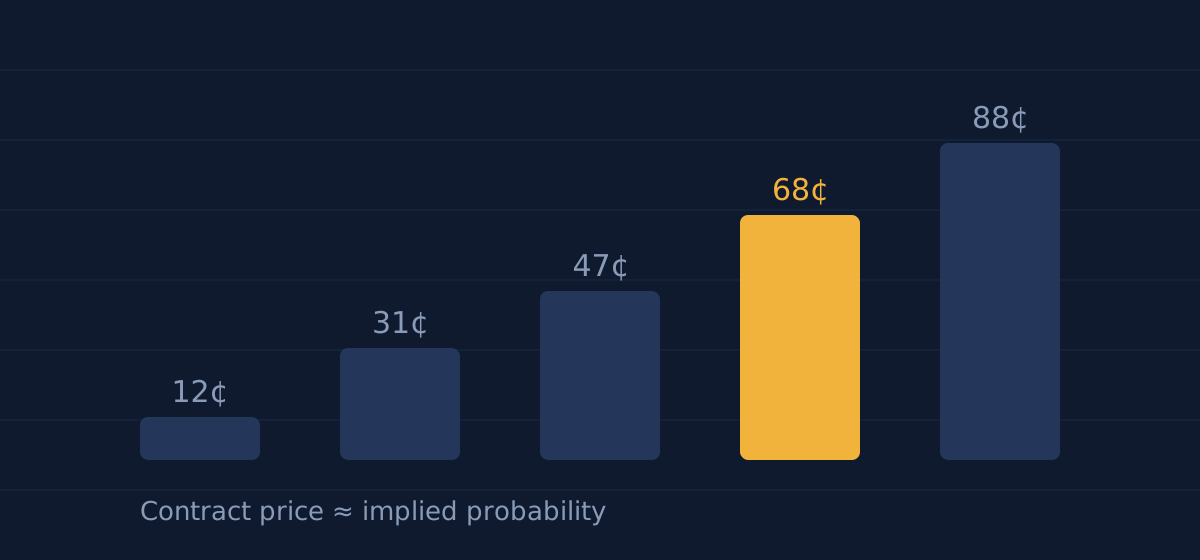
A prediction market lets people trade contracts on whether something will happen. Each contract pays out a fixed amount, usually $1, if the event happens and nothing if it doesn’t. Because the payout is fixed, the price people are willing to pay for a contract works as an estimate of the probability. A contract trading at 68 cents implies roughly a 68% chance.
Why the price is a forecast
If you think an event is more likely than the price suggests, buying is a good bet. If you think it’s less likely, selling is. Traders who believe they know better push the price toward their view, and they have money on the line when they do it. The price that results is a running summary of what everyone trading thinks, weighted by how much they’re willing to risk.
That’s the core idea behind PredictionStars. A poll tells you what a sample of people thinks right now. A market price tells you what people with something at stake expect to happen.
What makes the price move
- New information. A jobs report, a court ruling, an injury report or a candidate dropping out can reprice a market within minutes.
- Big trades. In smaller markets, a single large order can move the price even if nothing has changed in the world.
- Time. As the resolution date gets closer, uncertainty shrinks and prices tend to drift toward 0 or 100.
When to be careful
A price is only as good as the market behind it. Three things are worth checking before you read too much into a number:
- Volume. A market with a few thousand dollars traded is far easier to push around than one with millions. We only feature markets above a minimum volume.
- The exact question. Markets resolve on precise wording. “Fed cuts in December” and “Fed cuts by 50 basis points in December” are very different bets.
- Long shots. Research on betting markets has long found that very unlikely outcomes tend to be overpriced. A 3-cent contract is often worth less than 3%.
How we use it
Every PredictionStars story starts with a market that moved and asks the obvious question: what changed? We show the price, the move, the volume and the resolution rules, then explain the news behind the move in plain English. We don’t tell you what to trade.